Cafe Corner is the set that pulled me out of my LEGO Dark Age. It kindled a joy for building by showing how versatile LEGO bricks can be, recontextualizing parts in fun new ways in service of an immersive display to admire and play with. Since then, the annual modular releases continue to set the bar for innovative techniques and whimsical detail. 2026 marks 20 years of modulars, and as with any long-running tradition, it can be a challenge to satisfy old and new fans and keep things fresh. This year’s modular is the Shopping Street, two angular buildings separated by an alley. Hoang Dang said, “If you can imagine Assembly Square and Boutique Hotel having a child, this is it.” Those sets are both beloved modulars. How does their love child measure up? Let’s find out!

LEGO Icons 11371 Shopping Street| 3,456 Pieces | Available January 4, 2026 | US $249.99 | CAN $349.99 | UK £229.99
The build
The box includes 27 numbered bags, a bright green baseplate, and a square bound instruction book. As is usual for Modulars, there are no stickers to contend with.

Building a modular starts with a familiar rhythm as you lay out sidewalk and establish the building outlines. From the start, you can see some unusual angles and curves that set this design apart. The red and yellow studs below show the anchor points for the angled walls to come. The instruction manual also tells a delightful story about a mysterious water leak that is damaging the foundation of the building on the right.

Here you can see how the walls quickly veer off the grid. 1×2 round plates are the MVP element for achieving angles in the walls.

For the second time this year, I encountered a step where a tile is set into place with no stud connection. This still fees wrong, but it does allow for small gaps to be filled when the geometry gets wild.

The first floor of the sand green music store is the focus now. The novel stairs technique uses headlight bricks and sideways building with a half-plate gap between risers. It’s The light stripe is a fun detail that makes the most of the SNOT techniques. It’s these “reinventing the wheel” moments that I love most about modular builds.
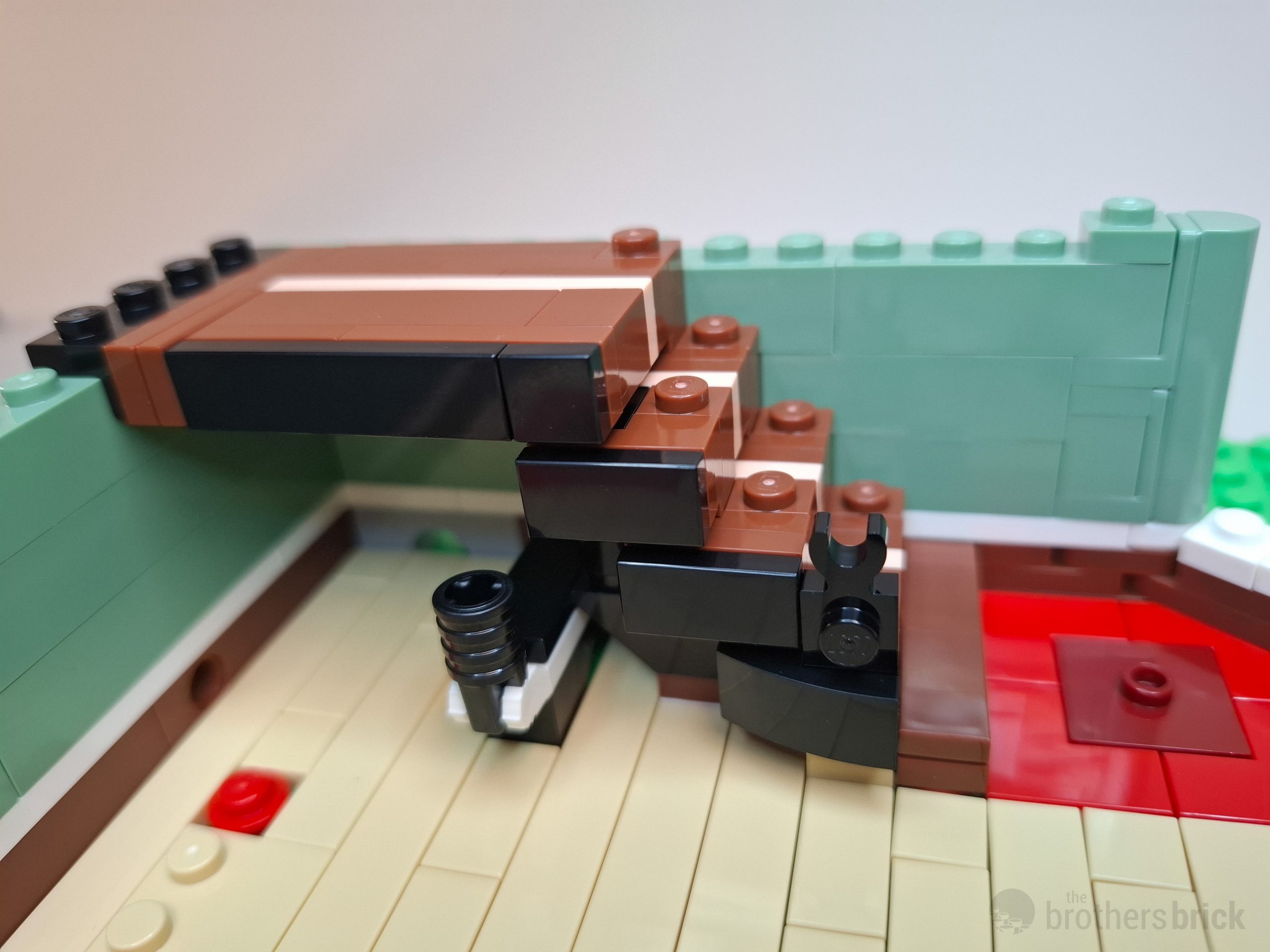
As the stairs curl upward, we build more of those lovely sand green walls. The designer intentionally selected sand green in order to bring back the 1×8 brick and 1×2 brick with groove from the Green Grocer back in 2008 which have become very hard to source. We also build our first instruments – a Sousaphone and a trumpet. we’ll come back to those later.

The front of the building front features printed windows, which are always appreciated. I also like the technic axels in sand green for decorative columns flanking the pay window and door.
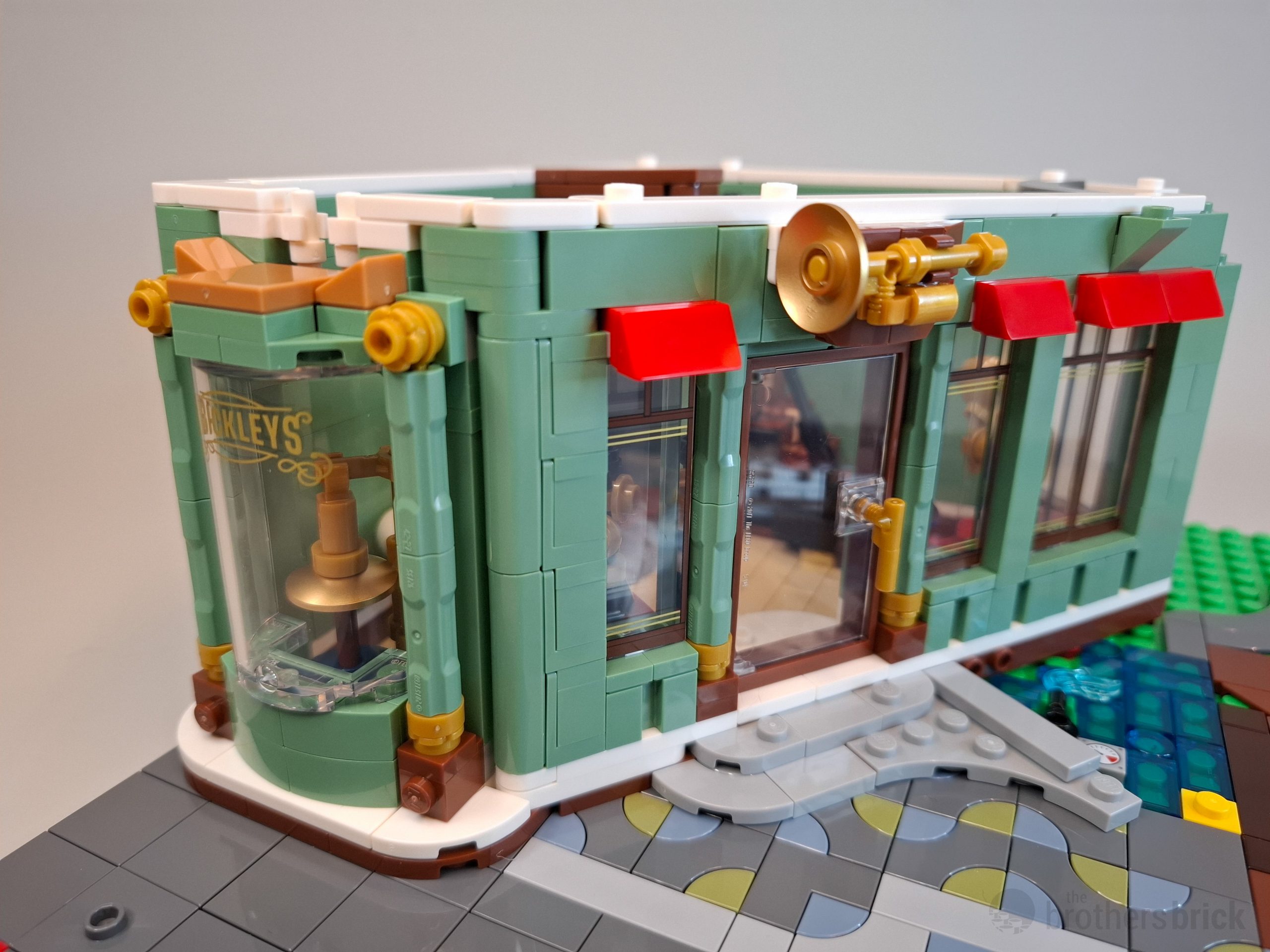
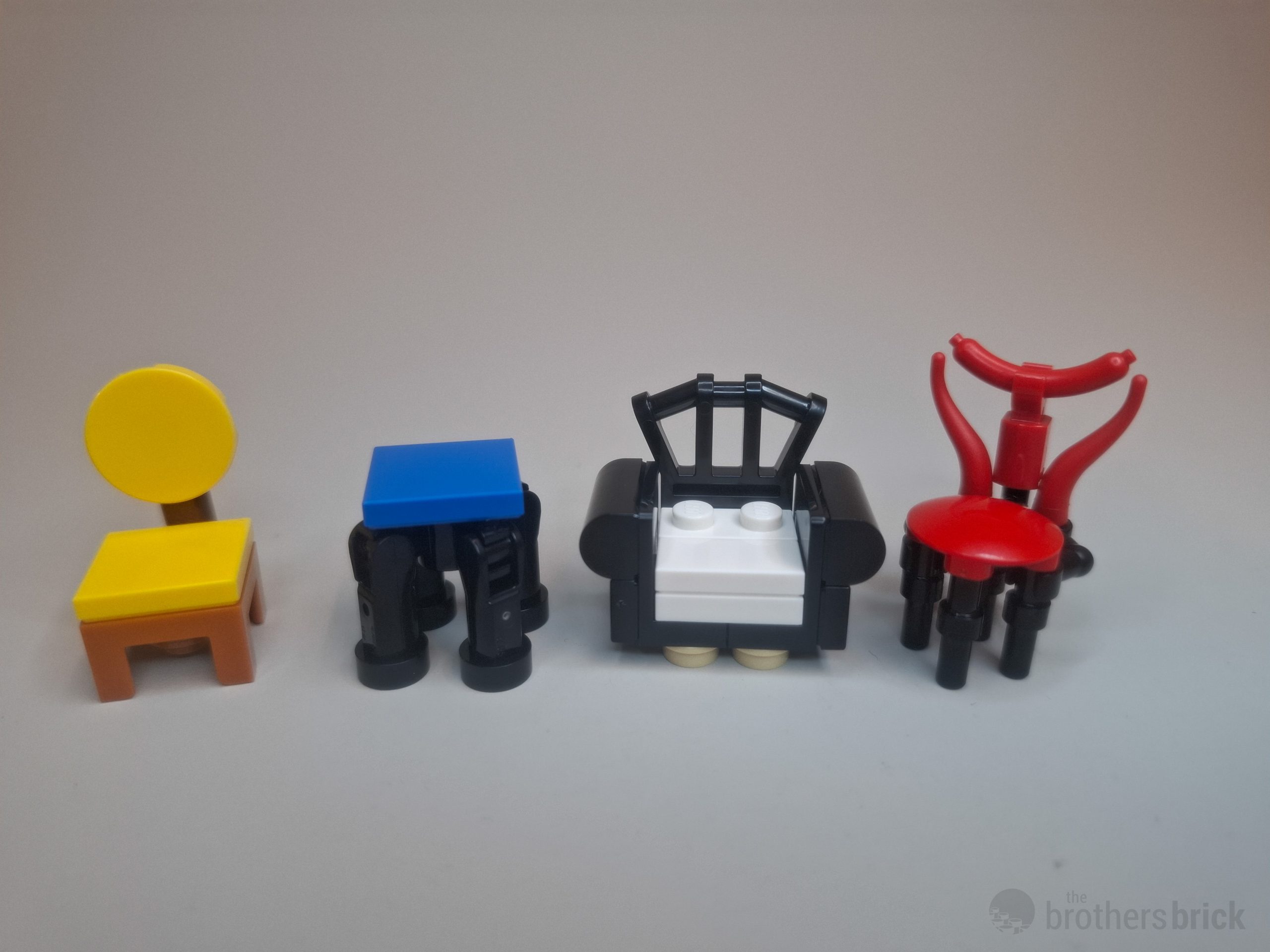
Now we cross the plaza and begin work on the furniture shop. A SNOT strip of sidewalk covers up the puddling water with a grate giving you a glimpse of the leak. The furniture store is quite cramped, but they still mange to squeeze in room for four chairs to display.

The chairs showcase different building techniques and primary colors. My favorite is the red chair with its hot dog and horns back.
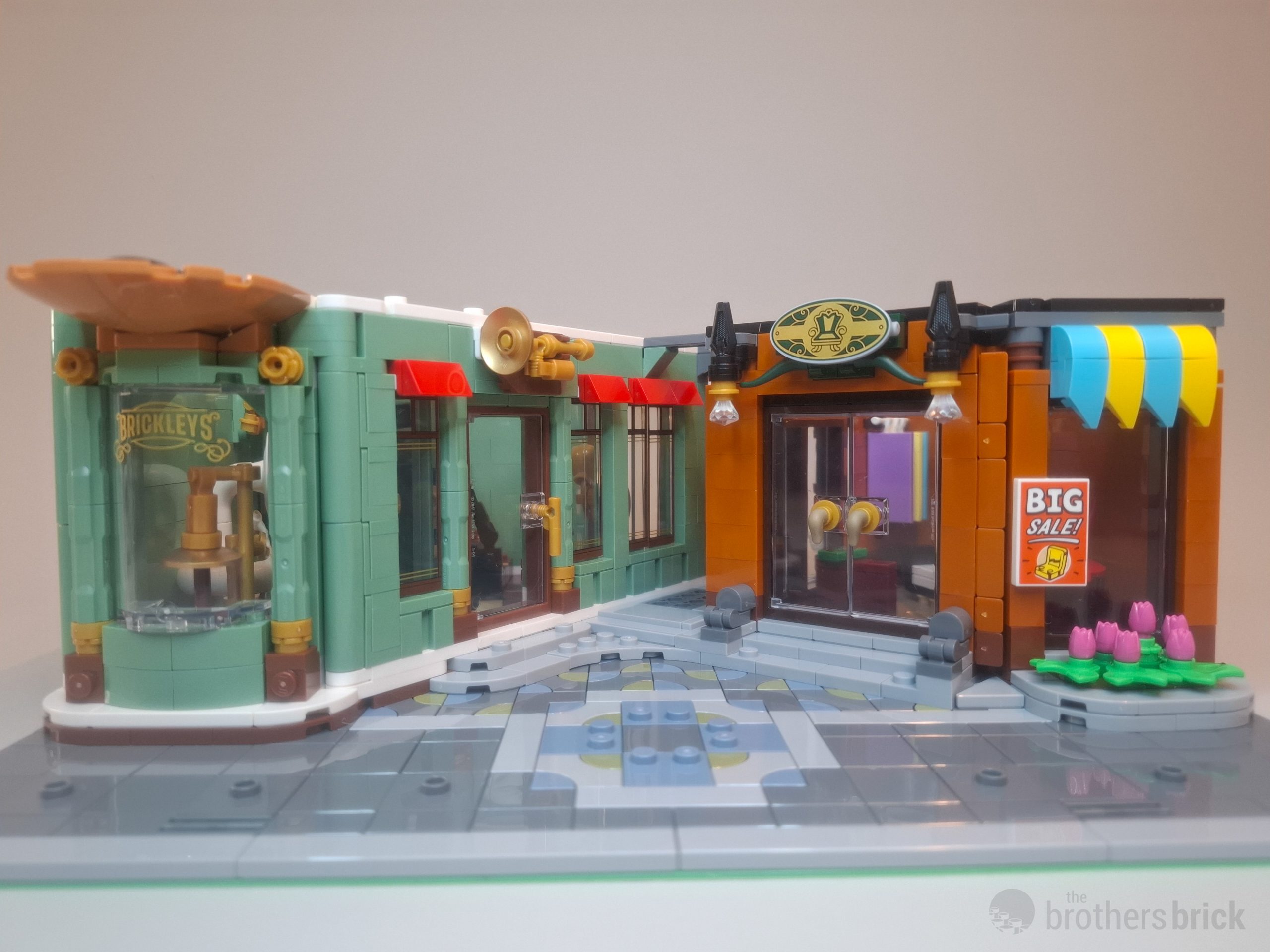
We wrap up the first floor by building the front of the Clothing store, which features some great lamps and a beautiful printed shield above the door. A sign on the window advertises a big sale on classic chairs.
Apparently, they couldn’t move the merch fast enough as the only place you’ll find this old school element is in the dumpster out back. This rear view also shows the leaky pipe which as bandage tied around it as a temporary solution. The real culprit can be seen hiding next to the dumpster.
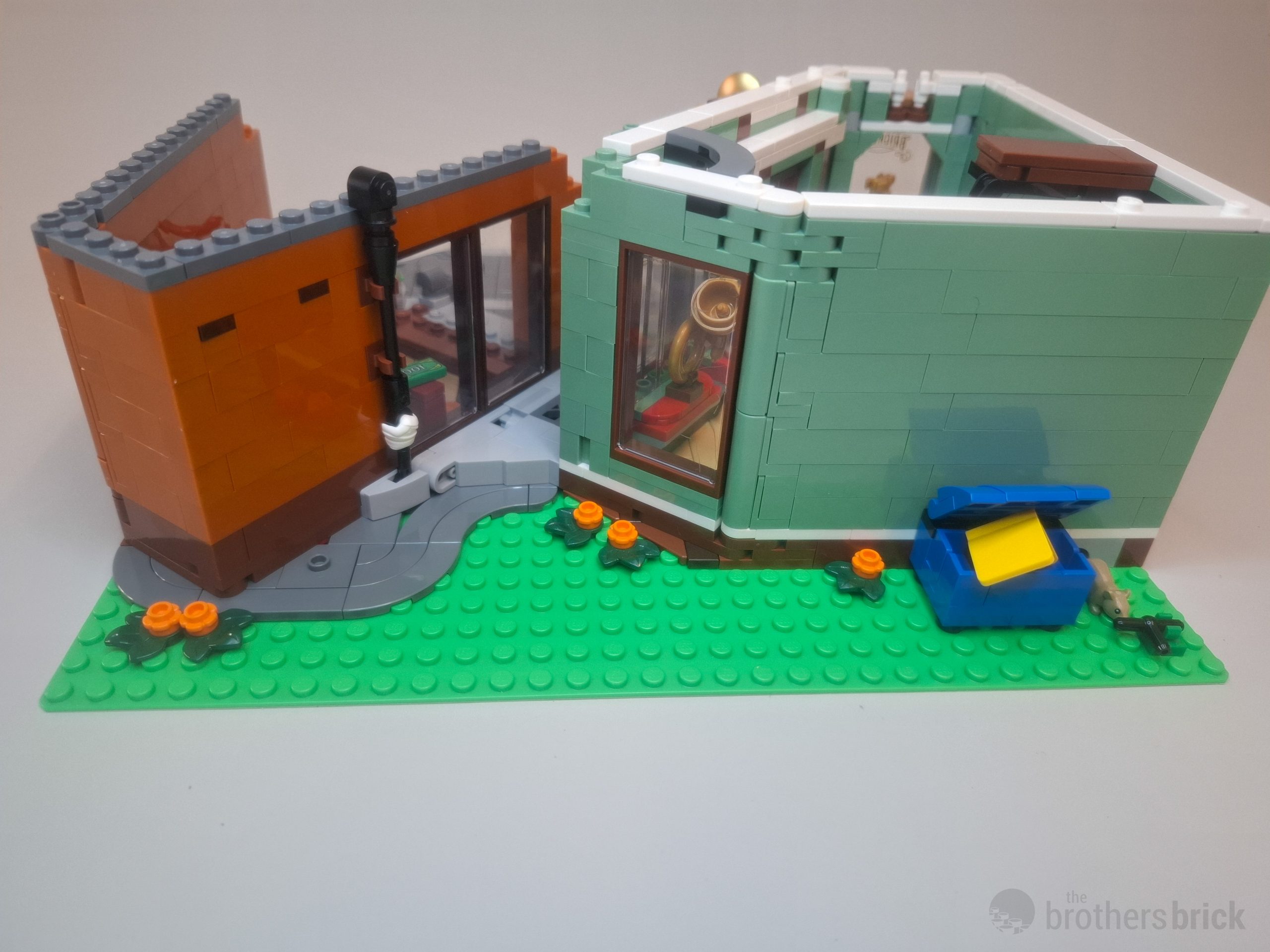
With the first floor complete, we move on to the second story floor. While he two buildings are separated by an alley, the buildings are connected on the second floor, which is handy, as there is no stairway in the furniture shop. The second floor reveals just how complex the geometry of this modular is – as well as how tight the spaces are.
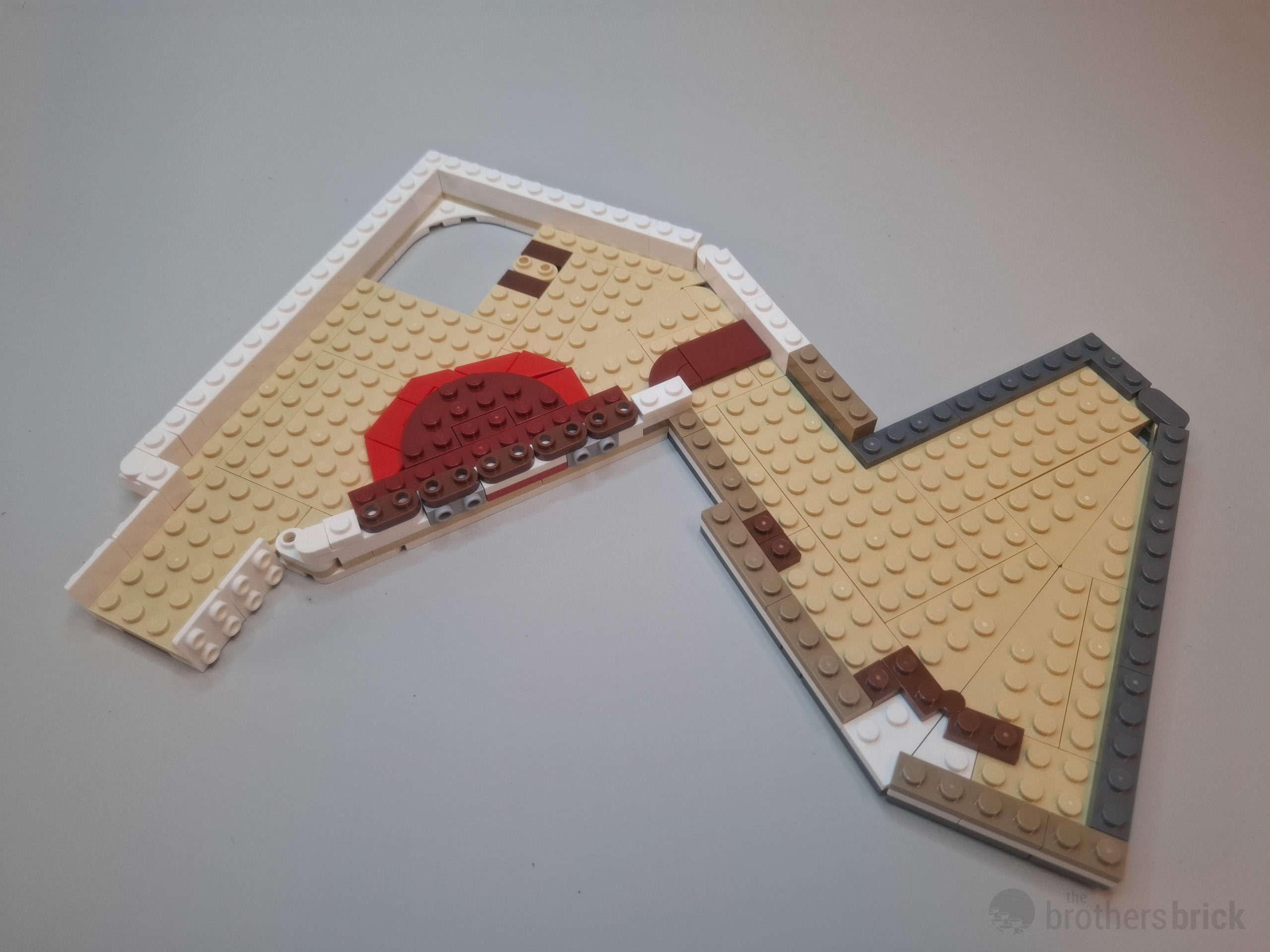
When laying out the tiles for this red carpet, you can see just how tricky it can be to create details that span the Pythagorean geometry. Fortunately those gaps get mostly covers up, as you can see above.

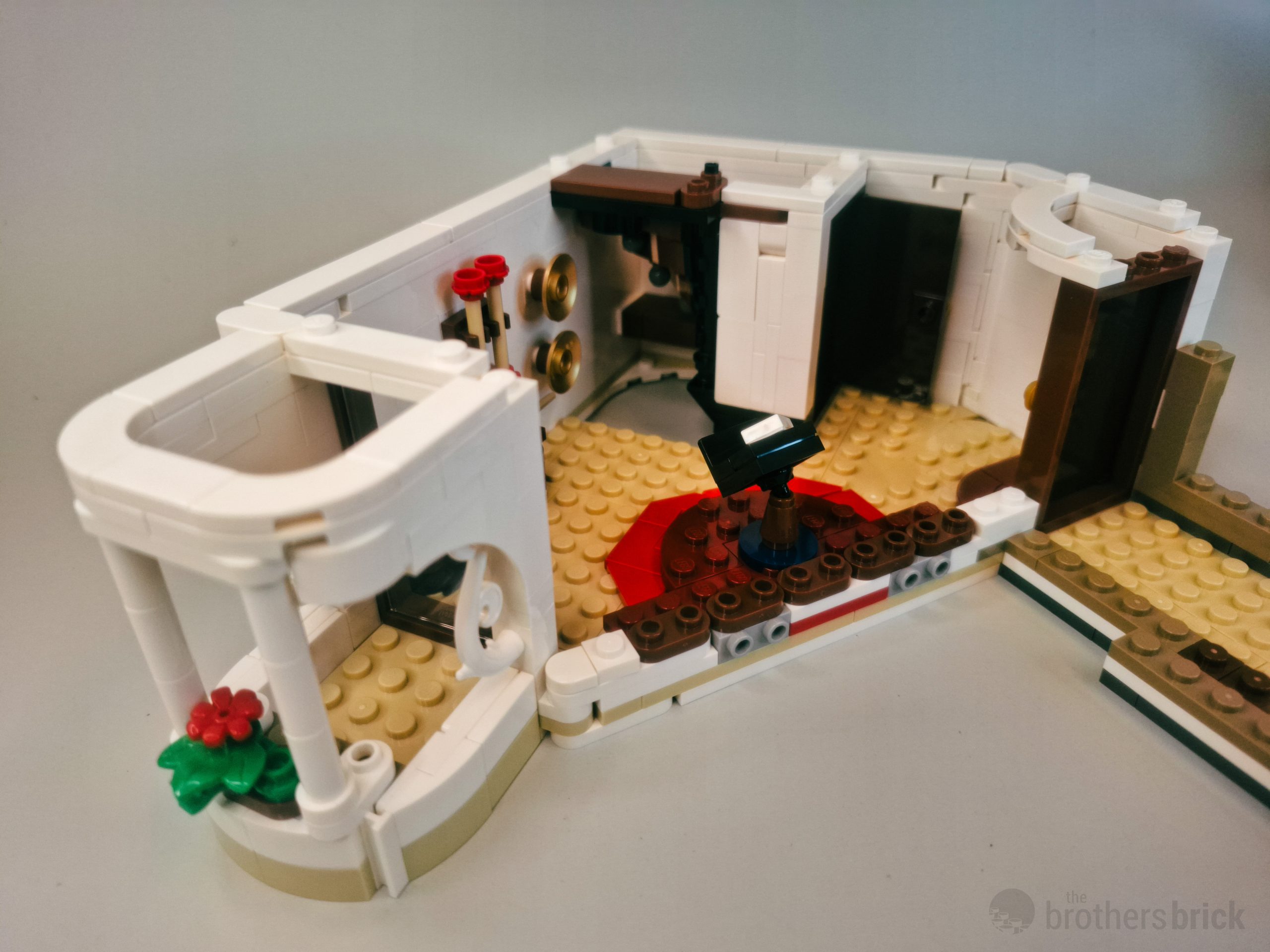
The music store adds more instruments. The stores continue their rise, this time, blocked by a door.

The building’s narrow point holds a balcony. This is probably the best viewing location for the silly hat parade.
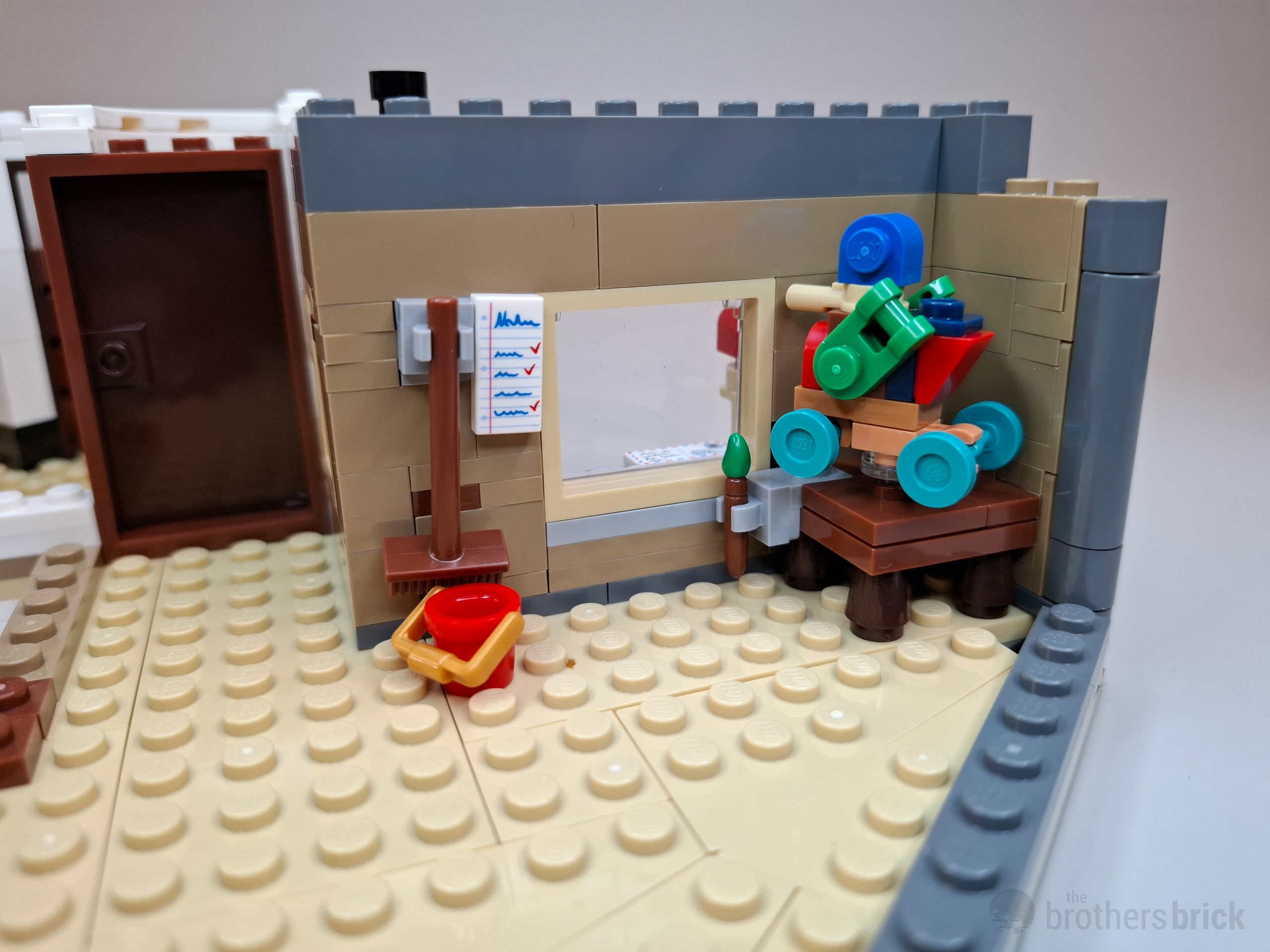
The second floor of the furniture shop features a workshop where the owner is working on a familiar special project. The duck is a wonderful mini build and easter egg for LEGO fans.
The front windows all feature modest planter boxes. There are fun details on the windows arches, with the music shop putting recessing the decorative filagree elements into the gap on the arches. The workshop, meanwhile, uses dumplings as details under wheel arches.

On the back wall, we add some nice climbing vines and a windowsill where a feathered friend has dropped a letter. I appreciate the ivy upgrade to include heart tiles.

Two floors finished! You can see a few exposed studs on the balconies that we’ll come back to later.

Only the music shop building gets a third floor. It’s studio bedroom with some more fun furniture builds, like that armchair with Unikitty tails for arms. The light blue radio is a reference to Hoang Dang’s first set as a LEGO designer- 10334 Retro Radio.

Of course every modular needs a toilet! This one is located directly above the balcony. I’m going to assume there are some pipes hidden in the floor, otherwise, I take back the recommendation of the balcony for parade viewing. There’s n shower, so I assume the resident washes in that tiny sink.

What this bathroom lacks in functionality, it makes up for in light!
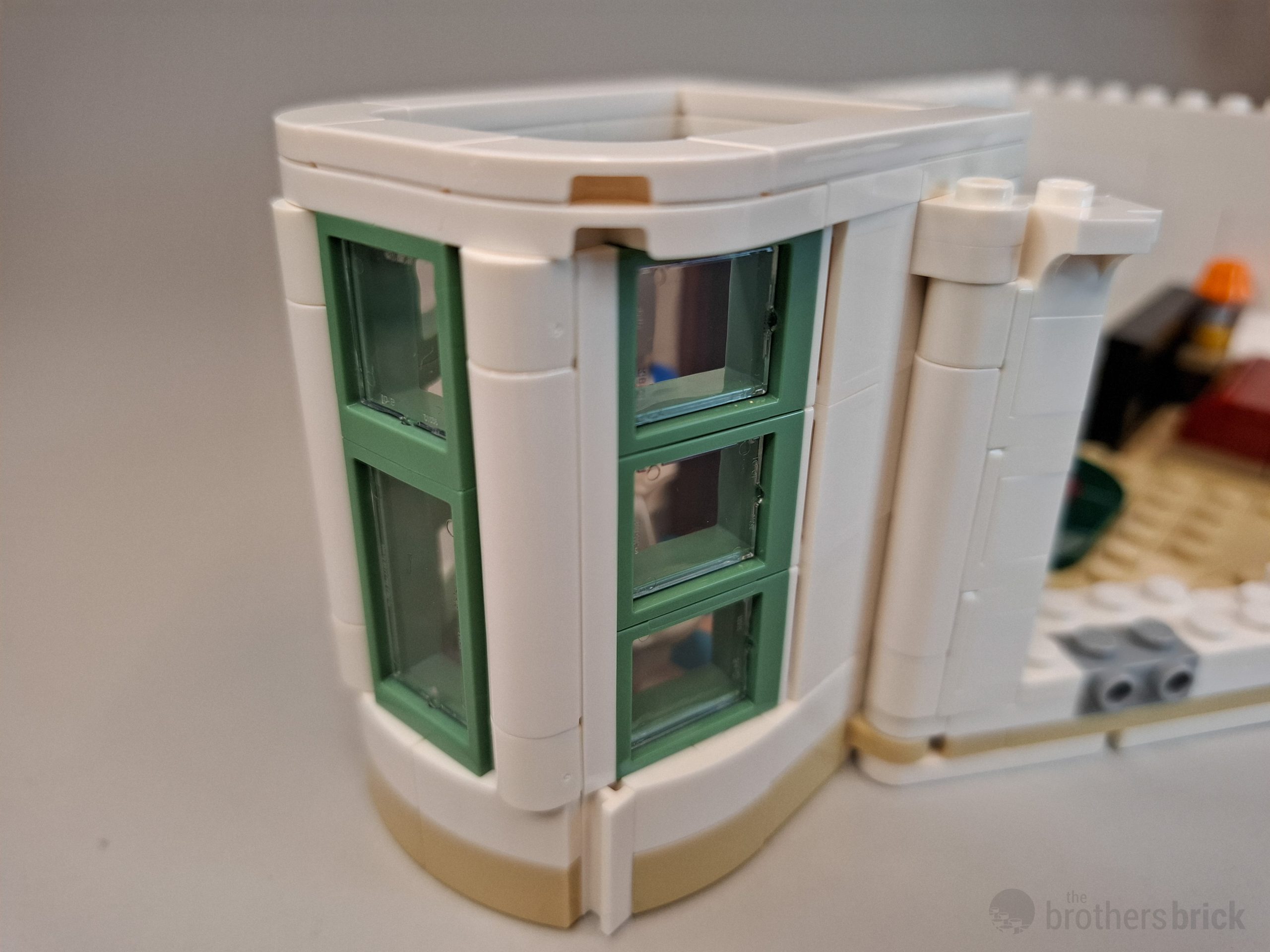
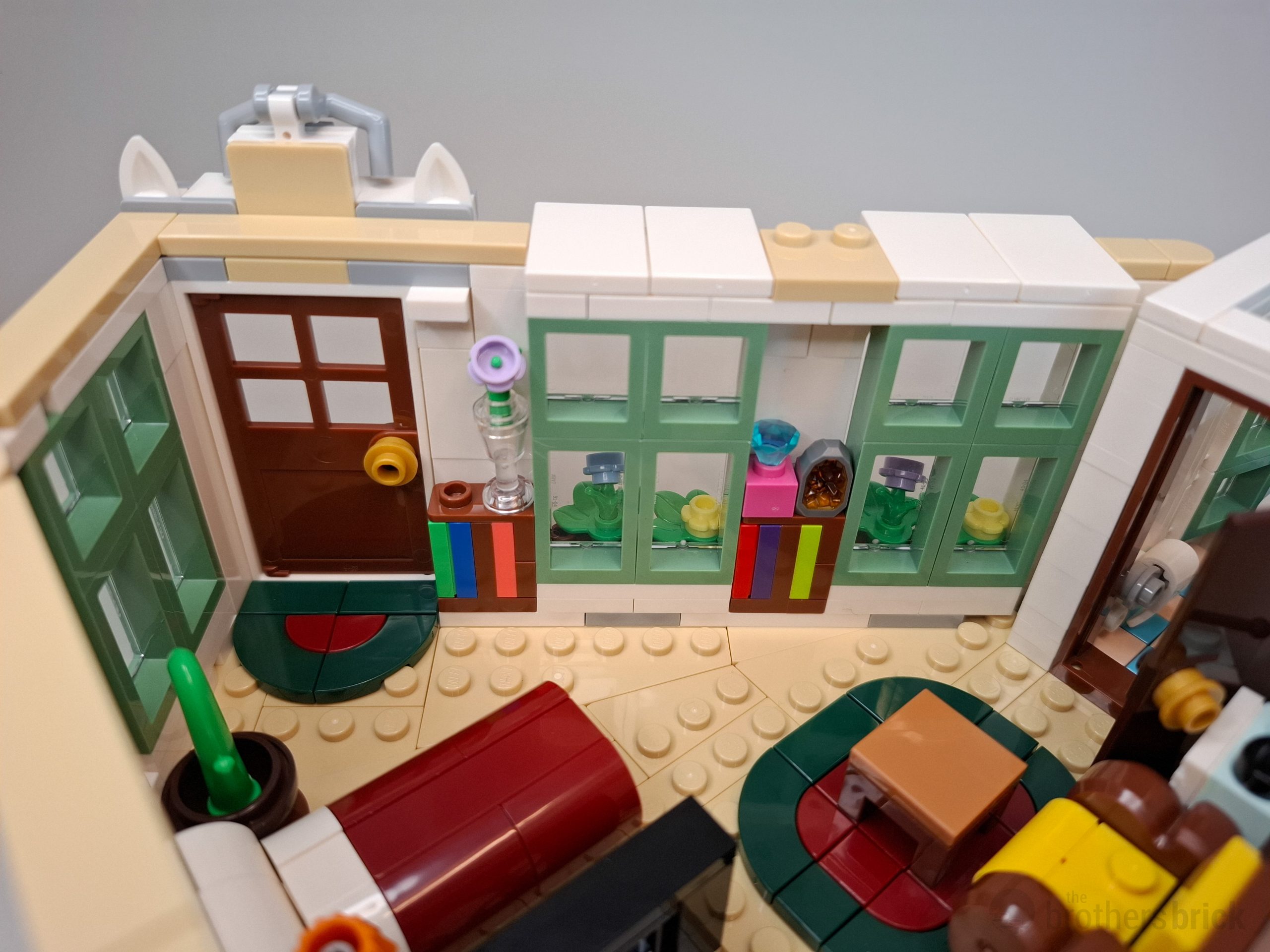
The final wall includes some built-in shelves and a some extra decor (always love a geode!).
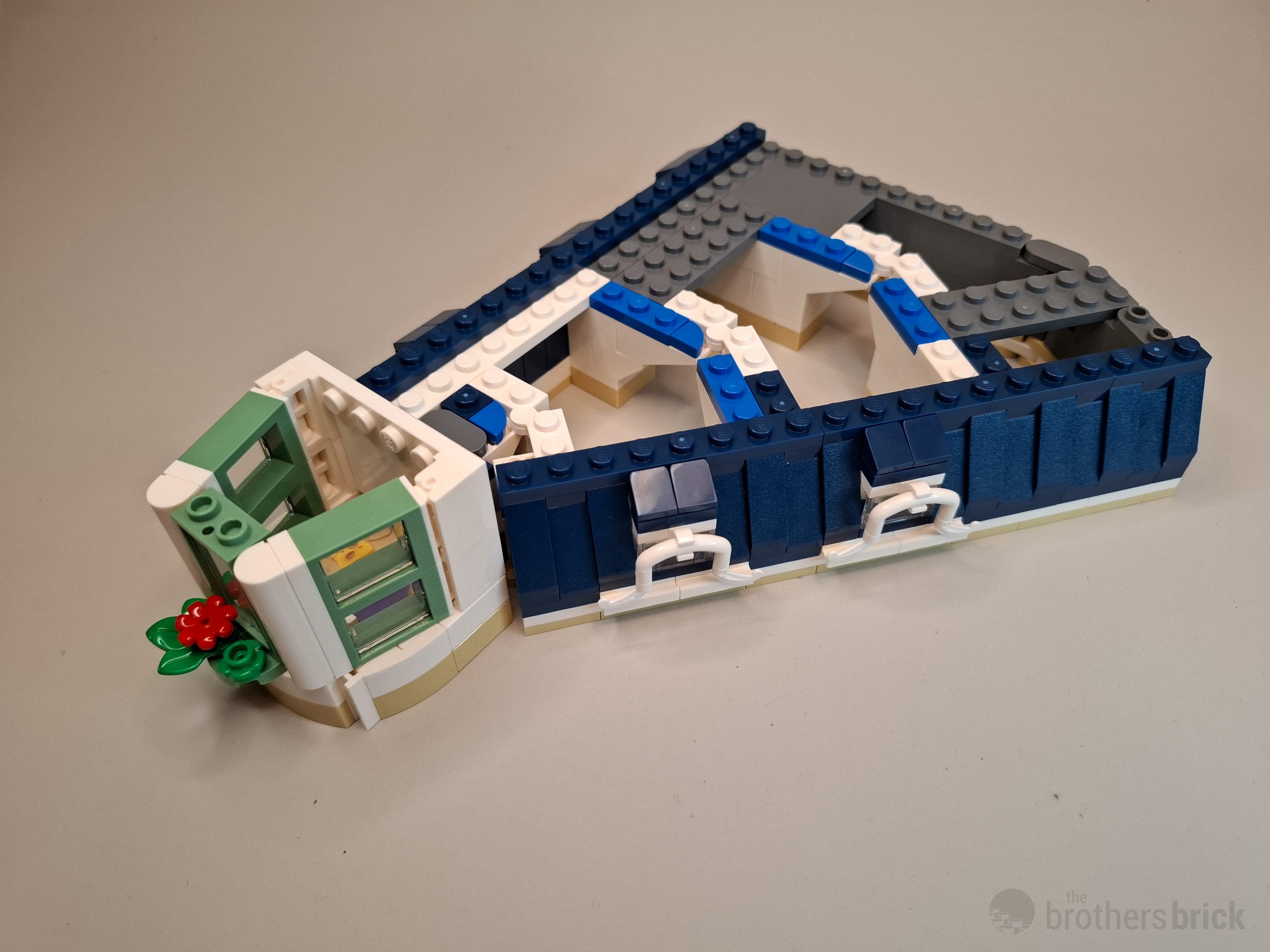
The third floor gets added to the stack! Now its time for the rooftops.

The music shop roof is tall, but not big enough for any spaces usable by minifigs. That extra little nook above the bathroom is big enough for for a rodent, however. Seems like our dumpster rat friend is living large with a printed cheese slope snack waiting for him when he returns.
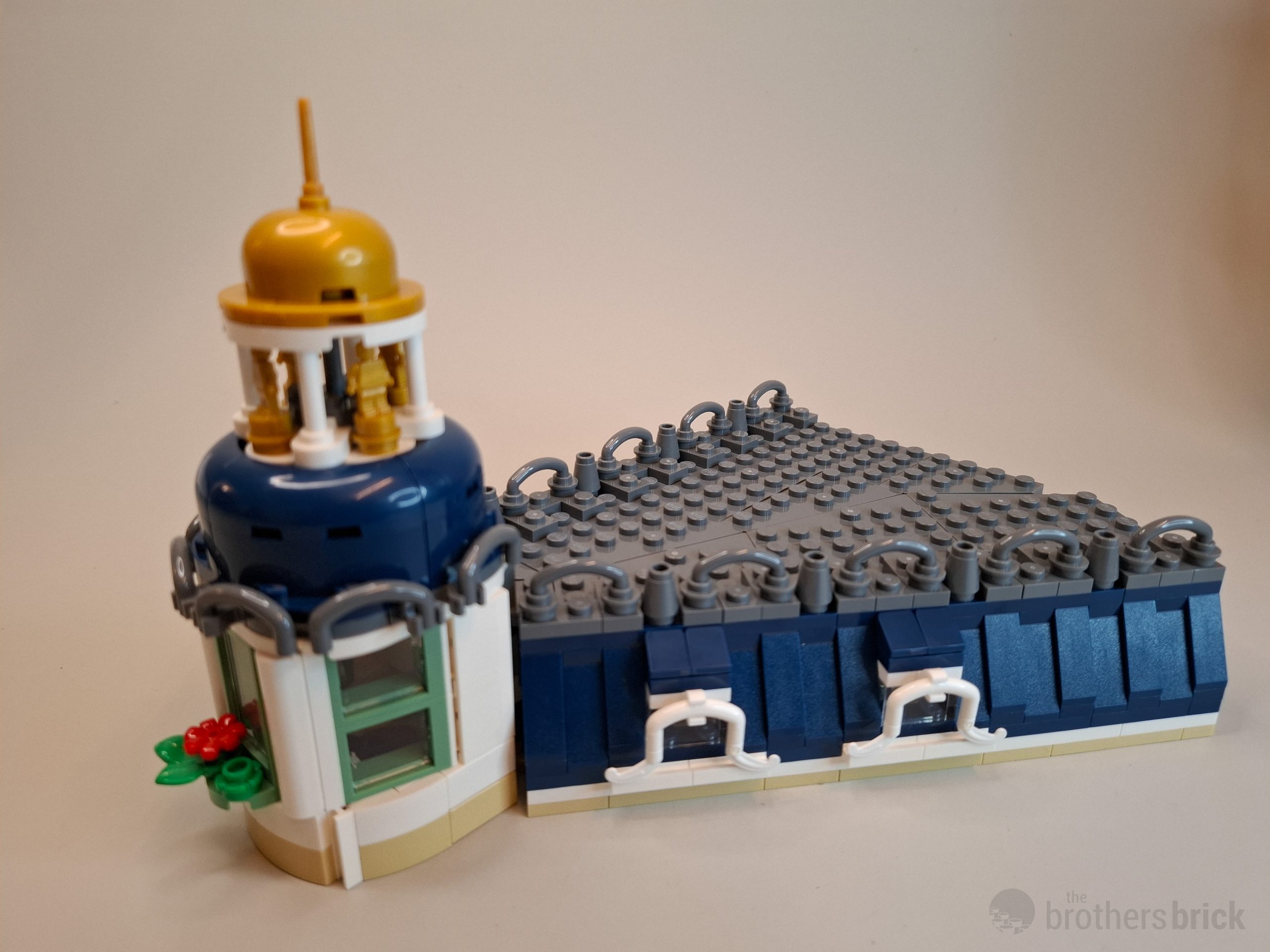
The dome top is a charming, with trophies and a gold dome topped with a wand. The new U-shaped arches are used to good effect as trim around the roof.
Meanwhile, above the workshop we build a rooftop garden with some clinging vines on a miniature ladder.

There’s also a dovecote for carrier pigeons. Very cute!
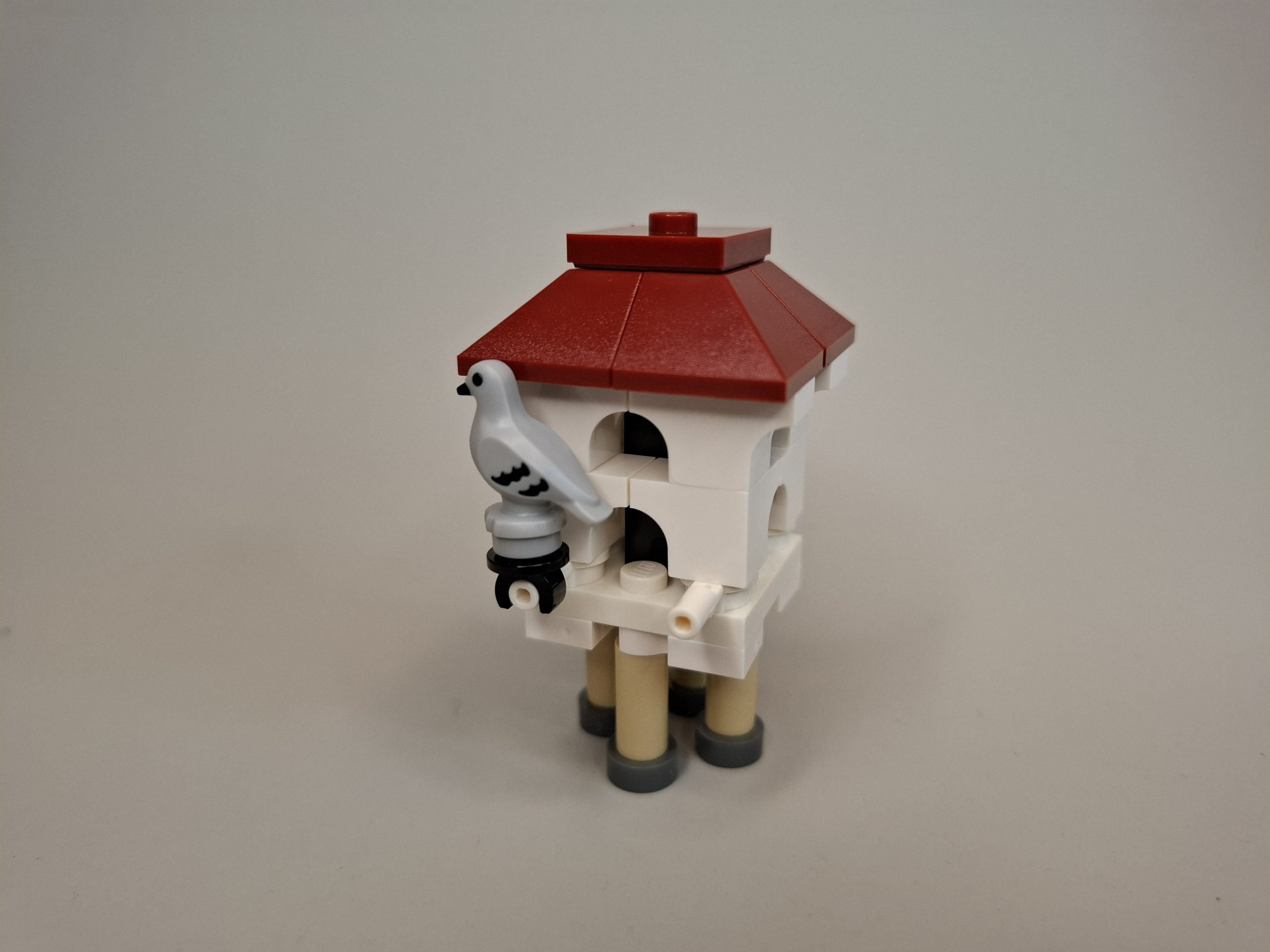
The build ends with a cate statue in the plaza, flags, and the traditional street lamp and fire hydrant. Another modular complete!

No extra decor for the back, but the unique geometry keeps it interesting.

The minifigures
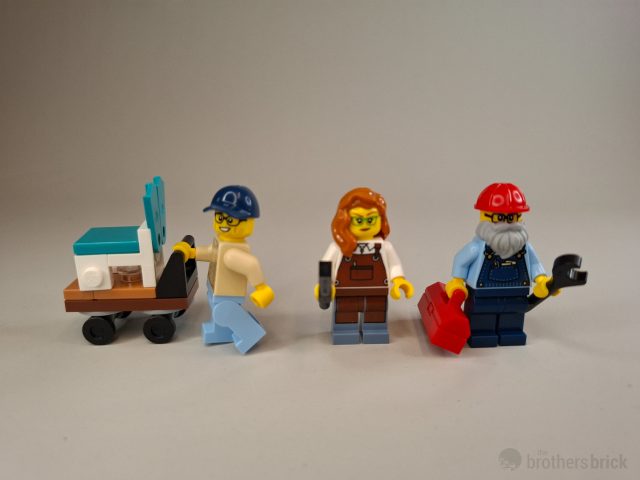
The typical 7 minifigures are included. First up are the furniture mover, the furniture maker, and a plumber. The furniture maker is the highlight with a new apron print torso and the only printed legs in the set. Everyone has back printing.

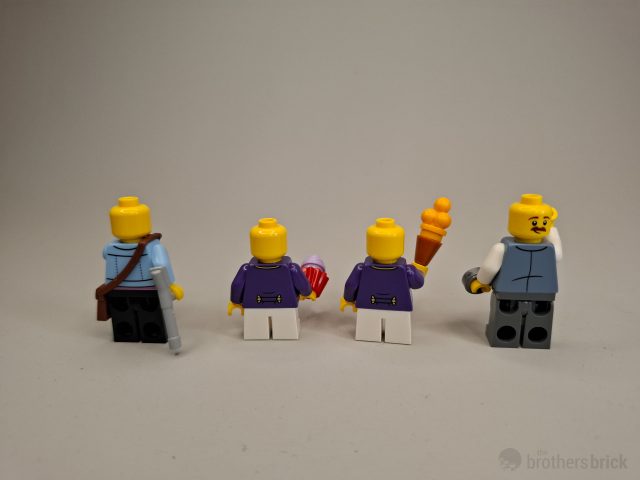
The twin music kids share a new purple torso and optional purple shaka hats to match (one of the hats is displayed in the store window). Mom has the new-ish crutch element. While this mix of characters make sense given the theme, they feel a little generic compered to other recent modulars. Modulars mostly re-use minifig elements, but it’s still possible to create memorable characters within those constraints, and this ensemble doesn’t quite do it.

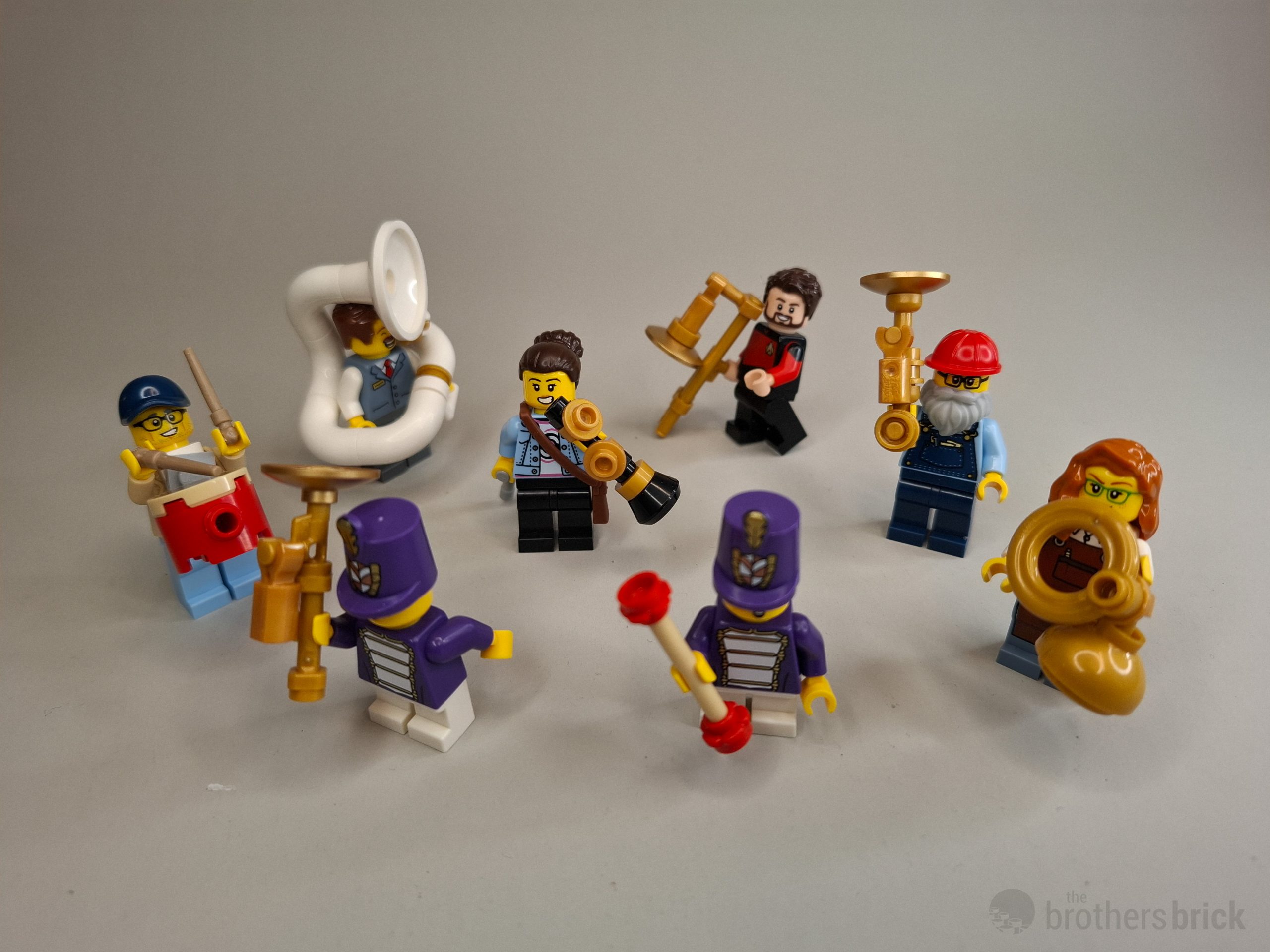
As promised, let’s take a look at the instrument builds! We have a sousaphone, French horn, clarinet, bugle, trumpet, trombone, and marching drum. Each is a clever design, with the white sousaphone a standout. The snare drum top repurposes a printed tile used as cut bamboo in a Botanicals set!

As clever as the designs are as display pieces, the instruments show their limitations when being held. Only the drum and Sousaphone can be held in a convincing way for play. As one of the twins wanted to hold the baton, there weren’t enough musicians for a full band, so I called in a ringer for trombone who happened to be on shore leave.
Conclusions & recommendation
What makes a great modular? I think it comes down to a great theme and successful execution. Sometimes you get an evocative theme, like movie theater, bookstore, or museum, but the build experience falls short. Shopping Street is the opposite sort of set – a bland concept as indicated by that boring name – elevated by some incredible techniques. The complex angles, distinctive shape, and clever sub-builds make this set a joy to assemble and admire.

One advantage of the complex angles is that there is more surface area of exterior decorative spaces than non-corner Modulars. On the other hand, the interior spaces are a bit cramped, with less floor space than usual.

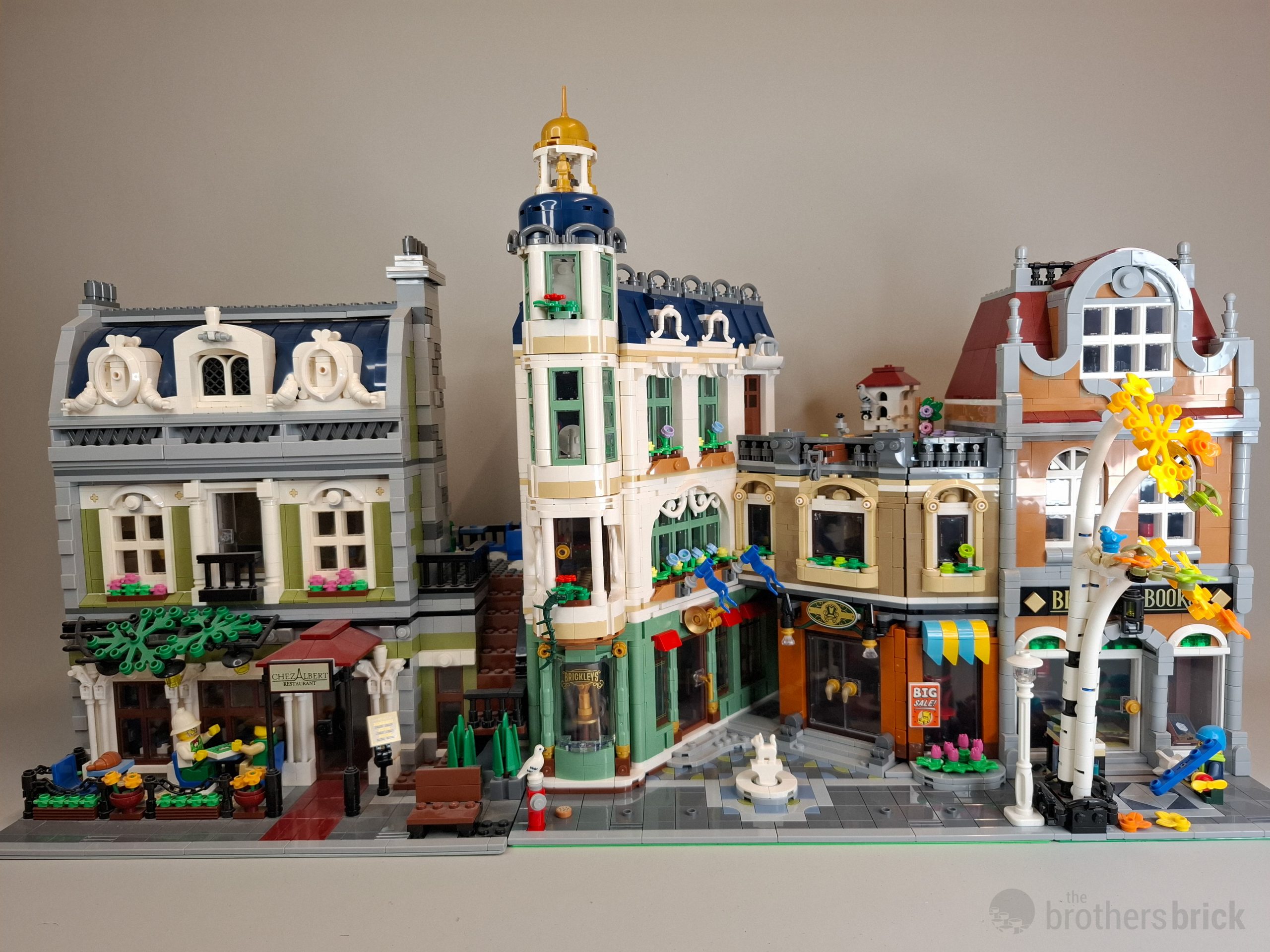
Standing on its own, Shopping Street fees a little small, but when set up alongside other Modulars, it more than holds it own with impressive height and beautiful asymmetry. The alley offering ingress to the backside of your modular town is a welcome addition, and evokes a lot of old European streets with alleyways leading to inner courtyards. I haven’t figured out where it will make its permanent home in my modular layout, but I’m liking this spot for now.
For the engaging build experience, I would rank this latest modular in the top half of Modulars, but lower down on that list. It really does feel like a hybrid of the Boutique Hotel and Assembly square, which takes away some of the novelty of the shape, even if the angles and techniques are quite novel and exciting. Also, Shopping Street suffers from coming after last year’s stellar Tudor Corner, a hard act to follow. Finally, there’s the matter of price. While 3,456 pieces for $250 is still a fair value compared to most sets, it’s a $20 jump from last year’s model, which was itself a $30 jump from the Boutique hotel. This set has more pieces than either of those, but with less impact. Part of the modular’s enduring appeal has always been that it’s an affordable luxury (unlike so many sets of late that are pushing LEGO into true luxury territory). The price isn’t unreasonable, just a disappointment.

If your favorite thing about modulars is the build experience, you won’t be disappointed with Shopping Street – it’s a treat! And it looks great in a bigger modular layout, adding variety by boldly going off grid. But if your shelf-space is limited and you can only pick and chose a few Modulars, try to find the Boutique Hotel if you can, or stick to last year’s Tudor Corner.
LEGO Icons 11371 Shopping Street includes 3,456 pieces with 7 minifigures, and will be available beginning January 4th, 2026 for US $249.99 | CAN $349.99 | UK £229.99 from the LEGO Shop, and may also be available from third-party sellers on Amazon.com or eBay.
The LEGO Group provided The Brothers Brick with an early copy of this set for review. Providing TBB with products for review guarantees neither coverage nor positive reviews.
Thanks for the review. It’s 3 times the price and four to five times better than 10362
Please use the title. Who remembers set numbers?
I think I will get this, I have a couple of modulars allready and have been wanting to do anothor one. This will leave me with a street that gose Corner Garage, Diner, Shopping Street, Birch Books, Boutique Hotel. If I can snag that gwp I might might some Rose Bowl style parade floats to follow it.
Thanks for the great review. I am a long time modular collector, but I will skip the Shopping Street. To me it feels like a large 3-1 Creator set, and not a modular building. There is a lack of finesse in the design details, that we normally se more of in modulars (ie. Parisian Restaurant). Also the color combination of the Shopping Street does not look pleasing to my eyes, neither in the interior or the exterior.